
Chattooga County Recent Arrests
Two sources track new Chattooga County arrests. The sheriff roster is the best online first stop for anyone who may still be inside the Chattooga County Jail. The other is the Jail Media Report. Coosa Valley News distributes it. It covers people still in custody when the report runs, plus people booked and released within its date range. That second group matters. Release quietly pulls a name off the current-custody roster, so the reports catch arrests the roster no longer shows. Each report is generated at a fixed run time. It is not refreshed around the clock. Morning samples from 2026 covered the prior day plus early activity on the report date. Weekend gaps can be gathered into a broader Friday-to-Monday file. The focused Arrests Last 24 Hours treatment explains the same-day window, while the Police Blotter page addresses multi-day and archived reports.
| View | Custody window | Key fields | Photos |
|---|---|---|---|
| Sheriff roster | Current custody, subject to update lag | Name, status, arrest time, officer, bond and physical descriptors are associated with the search result | Current sheriff site says no pictures are published |
| Same-day media report | Prior day and early current-day activity in sampled reports | Inmate number, process and arrest times, agency, officer, charge, cash and property bond | No photos in current samples |
| Multi-day media report | Date range that can span a weekend | Current and booked-and-released sections with booking fields | No photos in current samples |
The official Chattooga County Sheriff website keeps its no-picture policy.
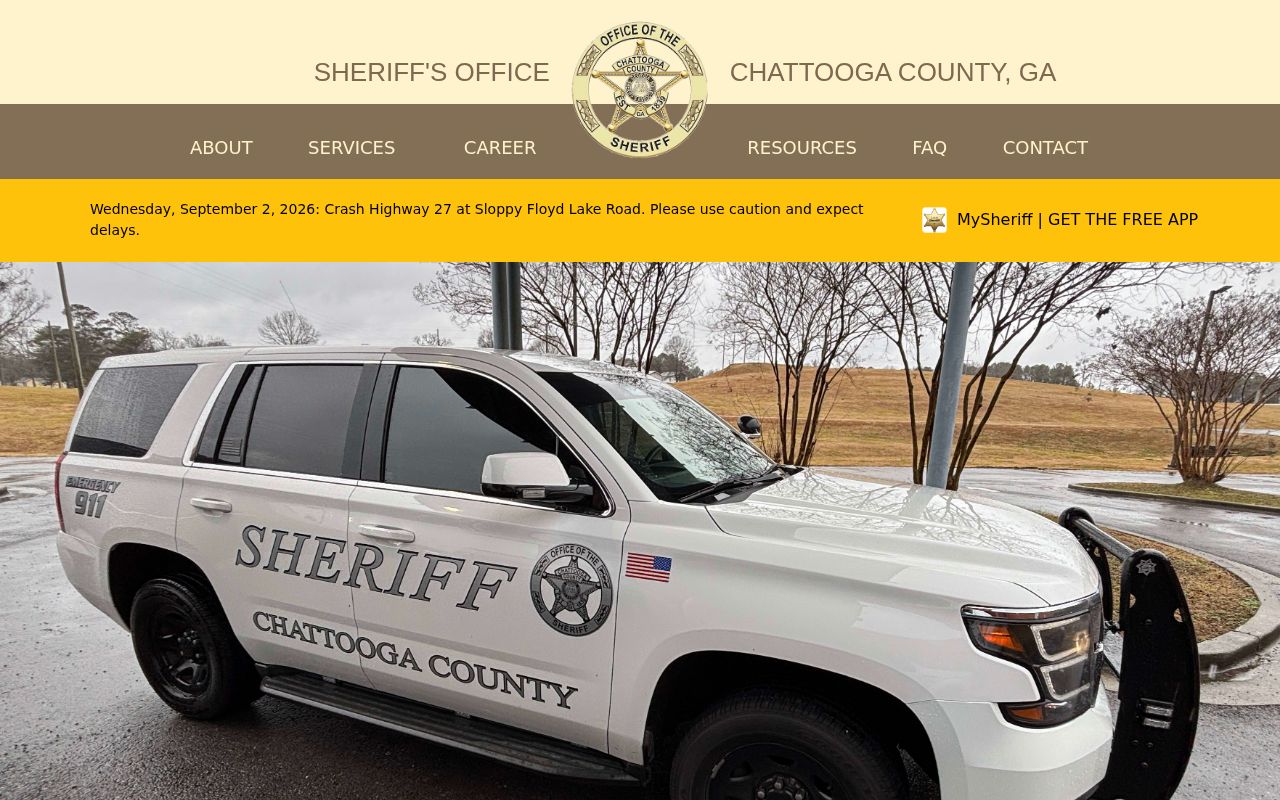
This page anchors the current publishing policy. Treat older report formats as history, not as today's practice.
Arrested Overnight in Chattooga County
An arrest late last night may not show up until a later file. Compare the newest dated Jail Media Report with the roster. Arrest time and process time are separate fields. An officer can make an arrest before midnight while jail processing happens hours later. Or an early booking makes the morning report while a later event waits for the next run. A missing entry is not proof that no arrest occurred. Pick up the phone when the answer matters now. Call the Chattooga County Sheriff's Office at 706-857-3411. The public interfaces can leave the question open. The written request form is the next step then.
When Chattooga Arrests Reach Reports
Three clocks can sit inside one Chattooga County entry. The arrest time, the process time, and the report's run time do not always match. The March 12, 2026 sample ran at 8:26 a.m. It covered March 11 through March 12. The May 20 sample ran at 8:28 a.m. It included an arrest from early that same day. Early current-day activity can therefore land in a morning file. None of that promises a guaranteed publication hour or an instant refresh.
Read all three markers before judging an entry. Arrest time points to the enforcement event itself. Process time marks the jail workflow recorded in the report. Run time is simply when the file was generated. A late booking can fall after the run. It then waits for the next report, and a weekend file may cover several days. This timing explains many apparent gaps without proving why a specific name is missing.
When speed matters, layer the checks: current report, roster, then a direct call. The sheriff has published no service-level promise for roster refreshes, holiday reports, or report persistence. Save the exact report date used and confirm a match by more than a name.
Search the Chattooga Jail Roster
The Chattooga sheriff inmate roster tracks current custody. Search fields commonly include the details below. The sheriff promises nothing about refresh times, partial-name matching, case sensitivity, or how long released entries stay visible. A blank result is not a final answer. Treat it as a prompt to check the dated media reports and contact the jail.
| Roster field | What it can clarify |
|---|---|
| Name and status | Identity and whether the listed record is active |
| Sex, height, weight | Descriptors used to separate similar names |
| Arrest date and time | When the recorded arrest occurred |
| Days in jail | Length of the present listed stay |
| Arresting officer | The law-enforcement source tied to the entry |
| Bond | The bond category or amount recorded at that point |
The roster source works best in a short sequence. Search the full legal name first, then compare descriptors. Read the status and arrest time rather than trusting the name alone. Then check the newest media report. If the person was released, work back through the booked-and-released reports. For a precise, dated answer, ask the sheriff for the underlying booking record.
The image shows a search tool, not a gallery. Current records must be checked on the live source.
Where Chattooga Arrests Get Published
Official channels should lead every search. Secondary publishers can help locate an old date, but their labels, update claims, and archives do not establish present custody or a case outcome. The MySheriff app is one official option. It sends alerts and news with no registration required. Nothing shows it duplicating the jail roster or publishing booking photos, so treat it as a news channel rather than a custody list.
| Channel | Role | Photo status | Authority |
|---|---|---|---|
| Sheriff roster | Current-custody lookup | No pictures published under current policy | County booking source |
| Jail Media Reports | Dated current and released booking entries | Current samples are text tables | Sheriff documents hosted by news media |
| MySheriff app | Agency alerts, news, services, events, tips | No documented booking-photo feed | Official app channel |
| Coosa Valley News | Current report archive | Varies historically | Secondary media host |
| Georgia Gazette | Independent county crime archive | May include record material | Unofficial and may be stale |
| RecentlyBooked | Approximate recent county window claimed by publisher | Says Chattooga images are unavailable | Unofficial; confirm every item |
Chattooga Arrest Alerts by App
The sheriff's office points residents to the MySheriff app. It is free, with no registration. Through it the agency pushes alerts, news, services, event notices, and anonymous tips. Android and Apple listings confirm that identity. Those tools help you follow public notices. They answer a different question. The app publishes no live inmate list, no booking feed, and no booking photos.
Stick to the functions the sheriff names. The roster and the Jail Media Reports remain the right sources for booking and custody details in Chattooga County. VINELink can fill in one person's later status as a supplemental service, though Georgia's own participation list omits Chattooga County. Treat the sheriff's social links as a booking archive only when an official post itself supplies the record.
The official MySheriff App Store listing supports alerts and agency information. It does not promise mugshots or live jail data.
Recent Arrests by Chattooga City
City arrests and county bookings are two different steps. Summerville, Trion, and Menlo each run their own police. The sheriff's office runs the county jail. When the jail books a city arrest, the Chattooga County report still names the arresting city agency, even with no separate city feed in place. Summerville Recent Arrests walks through that split, and the Trion and Menlo pages follow the same pattern.
- Summerville Recent Arrests: Summerville Police incident records and county-jail booking evidence.
- Trion Recent Arrests: Trion Police contact and the shared county report route.
- Menlo Recent Arrests: municipal records fallback where no city blotter was verified.
Inside a Chattooga Arrest Record
A booking record starts at jail intake. It is not the incident report. It is not the court file either. Chattooga's Jail Media Reports show enough structure to keep the arrest event, the processing, and the custody status distinct. They even separate people still booked from those already released.
| Field | Meaning |
|---|---|
| Inmate number and name | Jail identifier and recorded identity |
| Race and sex | Descriptors supplied in the report |
| Process date and time | When intake was recorded, which may differ from arrest time |
| Arresting agency and officer | Who brought or charged the person |
| Arrest date and time | Recorded time of arrest |
| Charge | Accusation stated at booking, not a conviction |
| Property and cash bond | Bond entries available at the report run |
- Booking
- The jail intake process after an arrest.
- Bond
- A court-set condition that may permit release while a case is pending.
- Arraignment
- A hearing where formal charges are presented.
- Disposition
- The final recorded result of a charge or case.
Chattooga Arrests After Release
Current custody and past bookings are different things. The roster fits when someone may still be held. A name can drop off the current list. A Jail Media Report can still keep that entry in its booked-and-released section. The underlying booking file stays with the sheriff far longer. Either web view shows only a slice of that record.
| Status | Best first source | What the source cannot prove |
|---|---|---|
| Just arrested or processing | Newest media report plus direct jail confirmation | A missing early entry does not rule out an arrest |
| In county custody | Sheriff roster and current-inmate report section | Roster status does not decide guilt |
| Released from county jail | Booked-and-released report and records request | Release does not state the court disposition |
| Sentenced to state custody | GDC offender search | State locator is not the original county booking file |
| Federal or ICE custody | Correct federal locator or custodian | A local report does not establish a federal hold |
"Released" has one meaning here: county custody ended under the condition recorded that day. It is not a dismissal. The final result lives on a court docket. A transfer also removes a person from the county view without ending custody somewhere else.
Chattooga Arrest Photos and Mugshots
The sheriff's site states it plainly: no pictures published. Current Jail Media Reports are text and tables. That rule covers publication only. An intake image may still exist in the file. You can ask the sheriff for a specific photo as a defined record, subject to Georgia law, exemptions, and the agency's custody of it. The state retention schedule lists no separate booking-photo line, so no retention period can be promised.
Georgia's O.C.G.A. § 35-1-19 bars agencies from posting booking photographs on their websites and from knowingly supplying them to sites that charge for removal. The Department of Corrections locator handles later state custody. It is not a county mugshot search. Its public instructions promise no offender-photo field. Old files travel badly, too. Third-party copies can sit stale, incomplete, or next to the wrong context.
Why Chattooga Mugshots Look Different
Older Chattooga material makes it look like every arrest came with a photo. A historical 24-hour report used a detailed legacy format. Older media presentations could support images. The current sheriff site, by contrast, publishes none. Current 2026 report samples are text and tables. Visible practice clearly changed. No document pins down the date of that change.
Compare files by publication date and source label. Dates matter most. A legacy report can explain an older search result, but it cannot define today's roster fields or photo policy. A third-party archive may preserve material collected under the earlier presentation. That does not make it an official live roster. For a specific current or historical photo, ask the sheriff whether the agency holds it and whether Georgia law permits release.
The useful task stays constant. Locate the source record, confirm identity and date, and follow the court outcome. If a publisher holds wrong, duplicate, juvenile, restricted, or outdated material, its documented free correction process comes after the official record is addressed.
Request Chattooga County Arrest Records
The sheriff posts an Open Records Request Form online. It asks for contact details plus the incident date, time, place, type, and description. Ask to inspect, pick up, or receive copies by mail. Give enough detail to identify the booking without guessing.
- State the person's full name and the exact or approximate arrest and booking dates.
- Add the inmate number, arresting agency, case number, and location when known.
- Name the exact item sought, such as the booking sheet or a particular booking photograph.
- Select inspection, pickup, or mailing and ask for a cost estimate before production.
- If material is withheld, request the cited legal exemption and check the court disposition separately.
The first 15 minutes of search and review time are free. Chattooga County waives that time under the request form. Work past that point gets billed at the rate of the lowest-paid skilled employee. Copying, reproduction, supervision, and mailing costs are billed too. State guidance points agencies toward a response inside three business days. That response may mean production, a schedule with an estimate, or a lawful exemption. Three days is a response window. It is not a promise that a complex record will arrive that fast.
Georgia Law on Chattooga Arrests
Georgia open-records law starts wide. Most initial arrest and incident records fall inside it. Still, redaction is allowed. Juveniles, victims, medical facts, protected identifiers, and parts of pending investigations can all be withheld, so a blank field may reflect a lawful limit rather than a missing event. The Attorney General's open-government guidance explains written requests and requires an agency to name the exemption it relies on.
Restriction is the Georgia sealing route. Start with the Georgia record-restriction process and the court's own materials. Eligibility depends on the charge, the outcome, and the date. Even then, copies linger. A restriction does not erase every local file, news page, cache, or third-party copy. After an official order, use the publisher's free correction channel and attach the order; RecentlyBooked, Mugshots.com, and The Georgia Gazette each describe such a free process, but none of it replaces a court or agency action. For minimum retention periods, the Georgia local-government retention schedule is the controlling source.
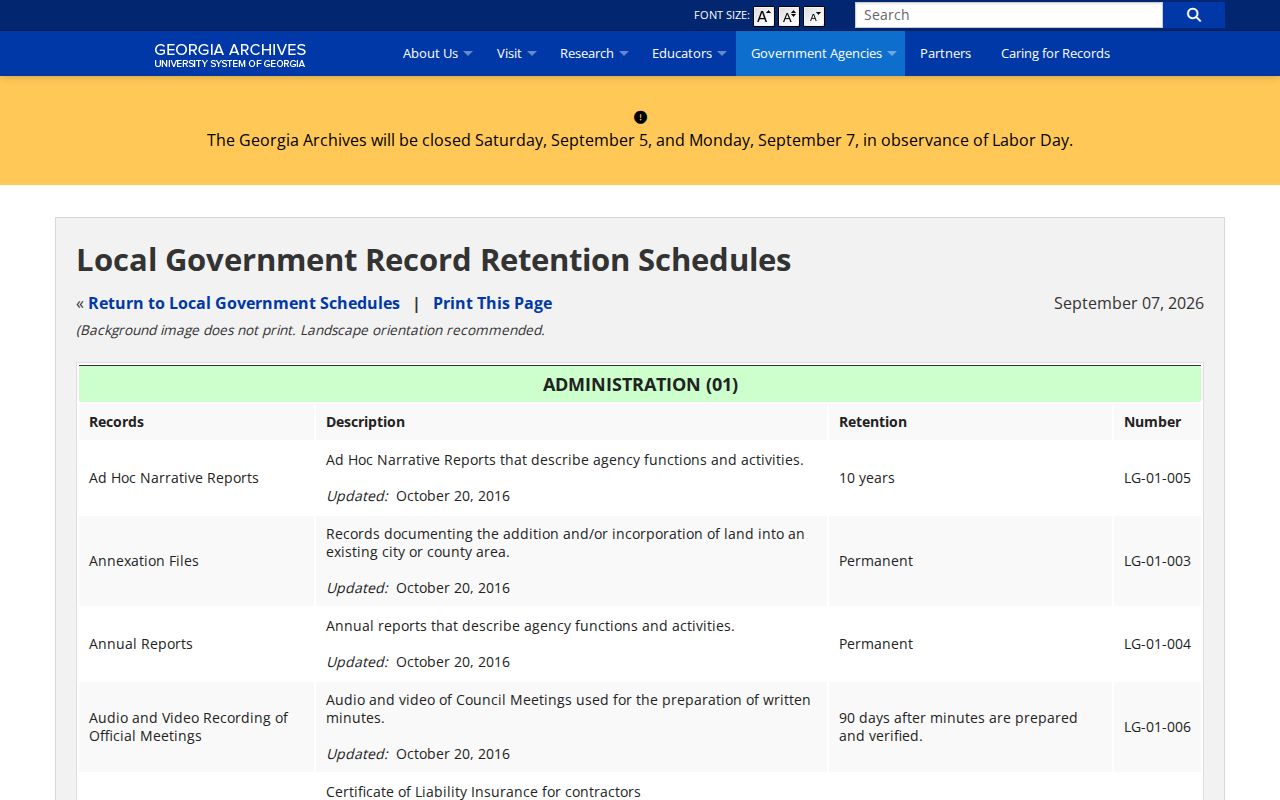
The retention schedule helps frame an older request. Still, only the sheriff can confirm whether a particular Chattooga record still exists.
When Chattooga Arrest Details Are Withheld
Public access has edges. Georgia guidance lets agencies shield juvenile material, victim information, medical details, protected identifiers, and records tied to pending investigations. An agency may release part of a document. The protected fields come back redacted. It can also claim an exemption that delays or blocks release entirely. When a gap appears, ask the custodian for the legal basis behind it rather than filling the blank with a guess.
Ordinary logistics explain missing names. A booking may not have been processed before the report ran. The person may sit with another custodian. A data correction may be underway, or the dated file may no longer be indexed online. Each cause points to a different follow-up. Ask the jail about current county custody, the arresting agency about its incident record, and the clerk about a filed court case.
Keep any request narrow. Give the person, event, dates, agency, and document type. When only part of a record is exempt, ask whether a redacted copy can be produced.
Chattooga Arrest Warrants and Tips
Chattooga County lists no public warrant-search portal. No official most-wanted page exists either. Skip the commercial lists that try to fill that hole. The Chattooga Magistrate Court handles arrest warrants, search warrants, preliminary hearings, and bail within its role, while the sheriff is the direct local contact for any warrant question. Ask a lawyer or the court before walking in. Georgia guidance warns that an active warrant can mean immediate custody. Never approach or detain a wanted person yourself. For an emergency, call 911. The sheriff's anonymous tip line for public-safety information is 706-857-0901, and the main office answers at 706-857-3411. The office runs no reward program and no regular social-media wanted series.
After a Chattooga County Arrest
A booking report only starts the paper trail. Magistrate Court handles warrants, hearings, and bail. Later filings and the final outcome show up in State or Superior Court records. The official Georgia Courts eAccess gateway routes Chattooga State and Superior searches through PeachCourt, while the local clerk and Lookout Mountain Judicial Circuit pages add contacts and calendars.
The court path can include arraignment, motions, a plea, trial, dismissal, or sentencing. Charges often change along the way. Match by name and case number. Then read the latest docket entry rather than the first booking charge.
The court-record gateway names the proper Chattooga courts.
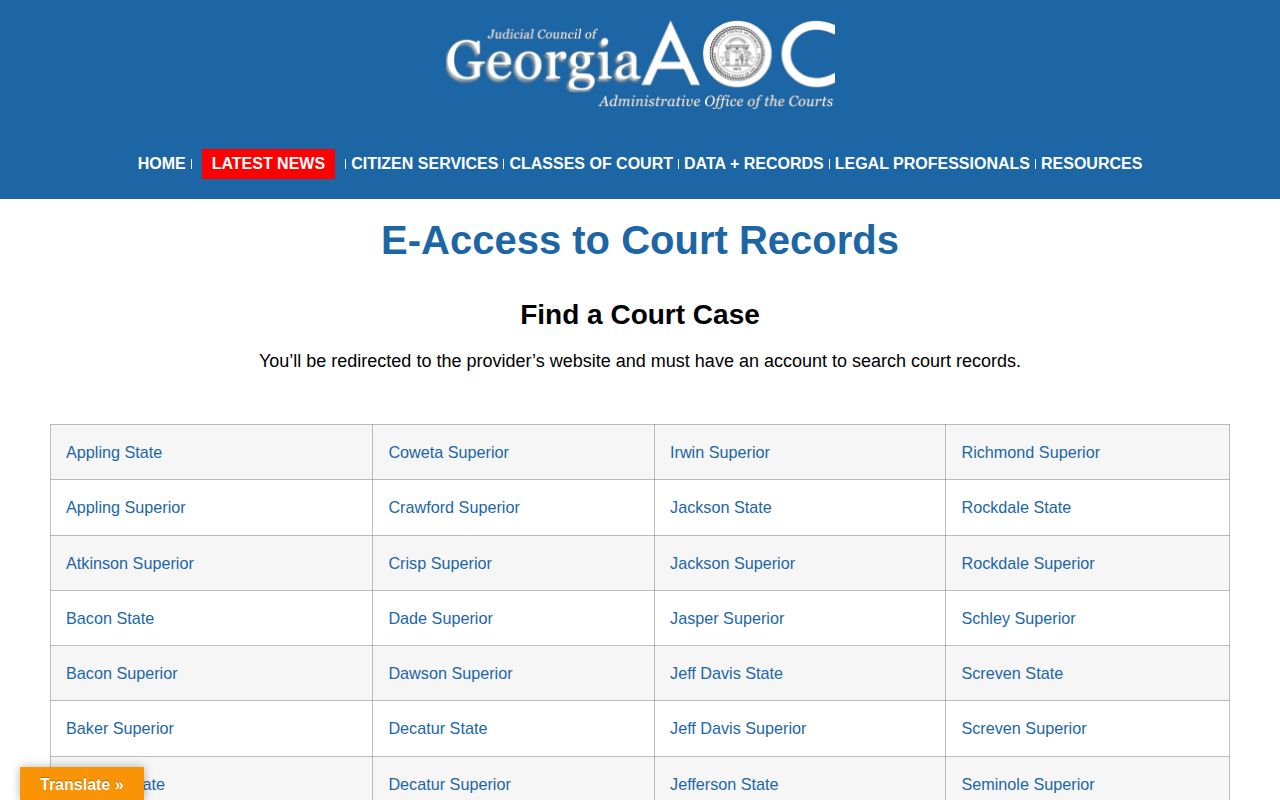
Booking and custody pages never show a case's final outcome, so the court channel matters.
Two Courts After Chattooga Arrests
Chattooga arrests can land in two courts. State Court and Superior Court both appear on the Georgia eAccess route. The Clerk of Court and the Lookout Mountain Judicial Circuit supply local contacts and calendars. A booking report alone is not enough. The right venue depends on the charge and on how prosecutors file it. One empty court does not end the search.
Start with a case number. Without one, search the party name and compare the filed date against the arrest and process dates. Read the latest entry closely. Look for a dismissal, plea, transfer, or sentence. Magistrate Court explains the early stages, covering warrants, preliminary hearings, and bail. Juvenile proceedings and protected data may not be open through the same path.
How Long Chattooga Arrest Records Last
Two clocks govern Chattooga arrest records. One governs what stays online; the other governs how long the agency keeps it. Georgia's local-government retention schedule sets the minimums. Daily incarceration lists must be kept at least one year. Jail booking records and inmate case files last ten years after release. Jail registers last ten years after the final entry. Holding-cell video gets just 180 days. These rules cover the agency's custody of a record. They do not promise a document stays searchable on a public page.
Booking photographs get no separate line in that schedule. A photo usually sits inside a booking file. Only the sheriff's custodian can say how a given image is classified, kept, and released. For an old arrest record, give the sheriff a precise name and date. If the office says the item is gone, ask whether destruction followed an approved schedule. Then request the retention authority behind that answer. Court records belong with the clerk, while state-custody materials sit with GDC.
Can a person vanish from the roster while a booking record still exists? Yes. Release ends the current listing. The jail file can live on within its retention period. Check the booked-and-released media report before filing a records request.
Match Each Chattooga Arrest Source
No single office holds everything an arrest creates in Chattooga County. The sheriff or city police keep the incident report. The Chattooga County Jail holds the booking and custody record once it receives the person. Magistrate Court handles the early stages: warrants, preliminary hearings, and bail within its authority. State or Superior Court keeps the docket that tracks the filed matter toward disposition.
Aim each request at the custodian most likely to hold the item. Asking the clerk for a jail intake photo wastes time. So does asking GDC for a same-day county booking. Those systems serve different stages. Suppose Summerville Police made the arrest. Its incident report stands apart from the sheriff's jail report. The same split applies to Trion and Menlo enforcement. There, the county jail is the receiving facility.
Dates are the glue. Match the event date in the incident report against the arrest and process times in the booking report. Then match the filing date in the court docket. A name alone can fit more than one person. Add the inmate number, agency, location, or court case number whenever available. This source-by-source habit also speeds corrections. The error goes straight to the controlling office.
After sentencing, custody may move to GDC. Use that search only when the record shows a state transfer. Federal custody calls for the BOP locator or federal court and counsel. Never read a hold into a county list that stays silent about one.
Keep each response with its source date. A current roster changes; a filed court order does not. Verify every later update.
Custody Beyond Chattooga Arrests
County jail, state prison, federal custody, and immigration detention are four different worlds. Once a person enters state custody, use the Georgia Department of Corrections offender search. The federal Bureau of Prisons locator covers federal inmates from 1982 forward. It skips the Chattooga jail and posts no booking photos. ICE's locator handles certain immigration-custody records. It requires an A-number or exact biographical data. None of these tools speaks to a county court case.
VINELink sends status alerts for a matching participating record. The state source lists no confirmed Chattooga participation, and a no-result does not disprove an arrest. The VINELink Custody Check page explains those limits. It sends urgent county-custody questions back to the jail.
Need the statewide channel? Use the Georgia offender search entry. It marks where county custody ends and state custody begins.
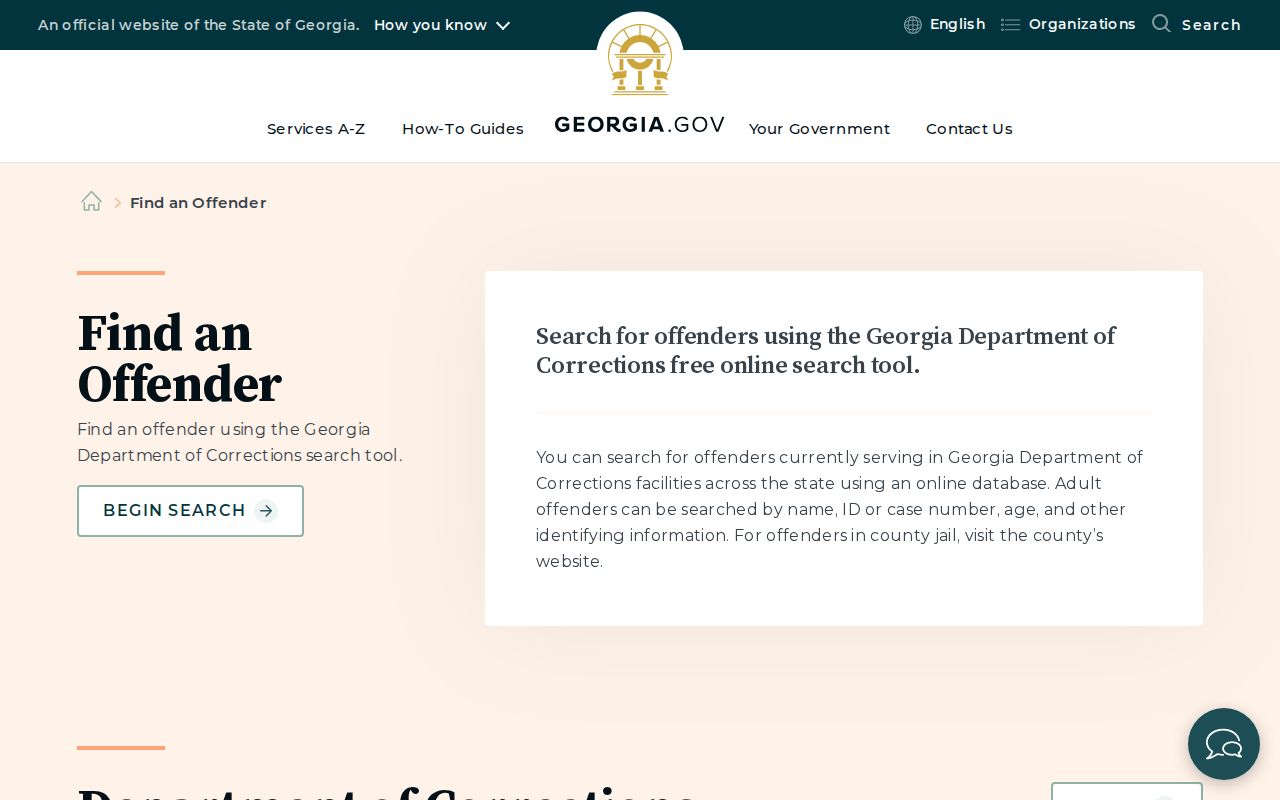
This state search comes late in the custody sequence. It is not a same-day Chattooga booking feed.